
Changing The Future Of F1
Racing was difficult in the 2000s. Even if you were one of the best drivers on the grid, it didn’t guarantee wins.
Let me explain…
It might take a few laps to close down a gap to the driver in front. Let’s say, you’ve managed to do it. Unfortunately, your life gets much harder now. As you close in on them, you suddenly notice your speed dropping…
Why?
Because of modern aerodynamics.
These cars release what is called ‘dirty air’ which slows down anyone behind them — making it impossible to overtake.
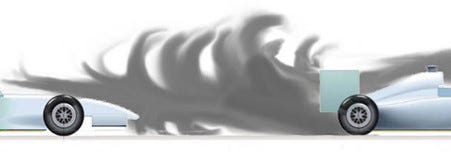
With marginal differences between you and your rival’s car, your finishing position was almost guaranteed to be the same as your current.
Now imagine you are the FIA — the governing body of motor sport.
You say that your priorities lie in ‘promoting safe, sustainable and accessible mobility for all’
But like every other sport, you need to sell tickets. You need to get broadcasters. You need to get people excited.
This is what brings you a big pay day. How else will they run this billion-dollar, year-long show?
If there are barely any overtakes, there won’t be much excitement… and your viewers will gradually decline.
Now we can’t have that, can we? Have a think for a minute - how would you fix this? Let me know in the comments!
Here is what the FIA did:
They introduced DRS – Drag Reduction System.
Let’s break down how it works.
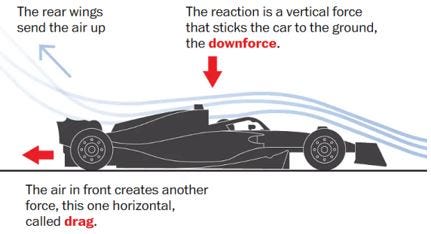
The air that is sent up by the rear wing in turn pushes it down — this is downforce.
This provides extra grip for the rear tyres but also increases the amount of drag created by the car.
Extra grip is very useful… but only when turning!
When the car is going in a straight line there is no need for this extra downforce and instead, the drag is simply slowing the car down.
To get around this, DRS changes the shape of the rear wing when the car is going straight.
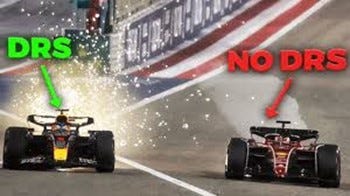
The RedBull has its wing open (thanks to DRS), allowing the air to pass through the wing – meaning less downforce and less drag.
The Ferrari has its wing closed which pushes the air up – more downforce and more drag.
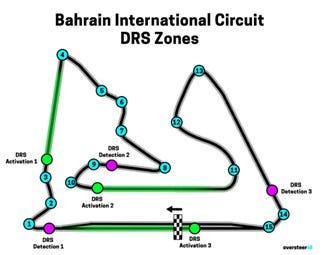
Every F1 track has its own DRS zones and is manually activated by the driver.
But remember, the FIA want to encourage overtaking, not just going faster!
That’s why the driver is only allowed to activate DRS when they are within 1 second of the driver in front.
That’s why you will see some drivers not being so aggressive and trying to overtake for the entire lap. Instead, they will creep up behind you and get within one second. Then, as soon as they are in the DRS zone, they will open that wing and fly past you… Like a lion pouncing on its prey when the moment is just right.
Now, the races were more exciting, more strategic, and more unpredictable.
Hang on a minute — if you’re thinking that this removes the skill of the driver and just allows anyone to pass at their will, you’re not alone!
DRS was, and still is, unpopular amongst many fans for this very reason. But it’s safe to say that Formula 1 definitely didn’t see a decline in their fan base…
Stay curious,
DG
Like this post? Share it with a friend! And if this one got you hooked, check out more in the archive.
It will be interesting to see how the new DRS rules impact F1 in 2026.